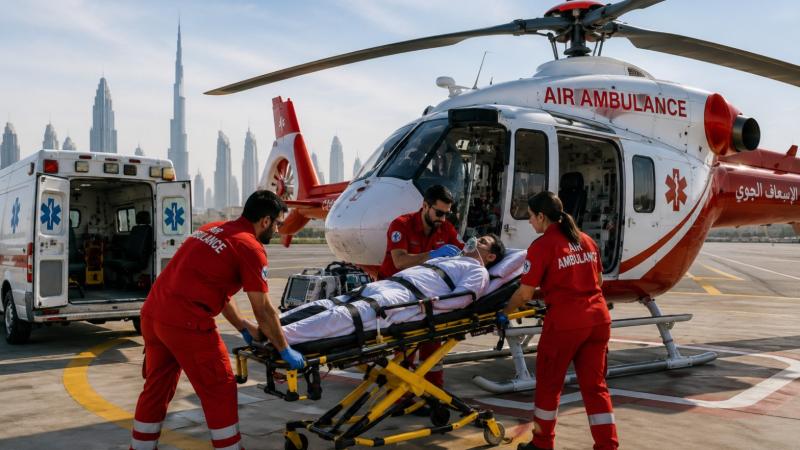
What Is Air Ambulance - Benefits, Uses & Process
Air ambulance services play a critical role in modern healthcare by providing fast and specialized medical transport for patients who require urgent attention. Whether transporting patients between hospitals, responding to emergencies in remote areas, or arranging international medical repatriation, these operations ensure patients receive timely and professional care during transit.
In recent years, demand for air ambulance has increased globally due to the need for rapid medical response, advanced onboard treatment, and international patient transfers. Cities like Dubai have become important hubs for medical aviation because of their advanced healthcare infrastructure and global connectivity.
What Is Emergency Medical Transport?
Emergency Medical Transport refers to the rapid movement of critically ill or injured patients using specialized medical transportation systems. This can include ground ambulances, helicopters, or fixed-wing aircraft depending on the situation and distance involved.
Air ambulance services are often used when:
-
Immediate long-distance transport is required
-
Ground transportation is too slow
-
The patient needs constant medical supervision
-
Remote or offshore locations are involved
-
International patient repatriation is necessary
Because time is often critical, Emergency Medical Transport can significantly improve patient outcomes in life-threatening situations.
What Does an Air Ambulance Include?
An air ambulance is a specially equipped aircraft designed to transport patients who need urgent or specialized medical care. These aircraft function as flying intensive care units and are staffed by trained medical professionals, including doctors, paramedics, and nurses.
Unlike standard commercial flights, air ambulances are equipped with advanced medical equipment such as:
-
Ventilators
-
Cardiac monitors
-
Oxygen systems
-
Emergency medication
-
Intensive care support systems
The primary goal of an air ambulance is to provide continuous medical care while transporting patients safely and quickly to medical facilities.
Types and Benefits of Air Ambulances
1. Fixed-Wing Air Ambulances
Fixed-wing aircraft are commonly used for long-distance domestic and international patient transfers. These jets provide stable flights, extended range, and advanced medical configurations.
2. Helicopter Air Ambulances
Helicopters are primarily used for short-distance emergency response and rapid evacuation from accident sites, offshore platforms, or remote areas.
3. Commercial Medical Aircraft
In less critical cases, patients may travel on commercial airlines accompanied by trained medical personnel who provide assistance throughout the journey.
There are several benefits:
Rapid Response and Fast Transportation
One of the main advantages of air ambulances is speed. They can significantly reduce travel time, especially when transporting patients over long distances or between countries.
Advanced Medical Care During Flight
Air ambulance aircraft are equipped with intensive care systems, allowing patients to receive professional treatment throughout the journey. This level of care is essential for critically ill or injured individuals.
Access to Remote Locations
Air ambulance services can reach areas that are difficult to access through traditional transportation methods, including islands, offshore facilities, mountainous regions, and rural areas.
International Medical Repatriation
Patients who become ill or injured abroad can be transported back to their home country safely with full medical supervision.
Flexible and Customized Solutions
Each mission is planned according to the patient’s medical condition, travel requirements, and destination needs. This ensures personalized and efficient transportation.
Air Ambulance Cost Factors
One of the most common questions patients and families ask is related to air ambulance cost. Pricing can vary significantly depending on several operational and medical factors.
Factors Affecting Air Ambulance Cost
-
Distance and destination – Longer flights generally increase operational expenses
-
Aircraft type – Helicopters and long-range jets have different pricing structures
-
Medical condition of the patient – Critical care cases may require specialized equipment and additional medical staff
-
Ground transportation requirements – Ambulance coordination before and after the flight may affect total costs
-
International permits and logistics – Cross-border operations may involve additional regulatory procedures
Because every medical mission is unique, air ambulance cost is usually customized according to the patient’s needs and route requirements.
How the Air Ambulance Process Works
The air ambulance process is carefully coordinated to ensure patient safety and operational efficiency.
Step 1 - Medical Assessment
Medical professionals evaluate the patient’s condition and determine whether air transport is suitable.
Step 2 - Flight Planning
The aviation and medical teams coordinate aircraft availability, route planning, permits, and hospital arrangements.
Step 3 - Ground Coordination
Ground ambulances may be arranged to transfer the patient between hospitals and airports.
Step 4 - In-Flight Medical Care
During the flight, the patient receives continuous medical supervision and treatment from the onboard medical team.
Step 5 - Arrival and Handover
Upon arrival, the patient is safely transferred to the receiving medical facility for continued treatment.
Why Air Ambulances Are Important
Air ambulances save lives by providing fast, secure, and medically equipped transportation during critical situations. In emergencies where time and specialized care are essential, these services bridge the gap between patients and advanced healthcare facilities.
With growing global mobility and increasing demand for international healthcare access, air ambulances continue to play a vital role in modern Emergency Medical Transport systems.
Conclusion
Air ambulance services are an essential part of modern emergency healthcare and international patient transportation. From rapid medical evacuations to complex international transfers, these services provide life-saving support through advanced medical equipment and highly trained professionals. Our air ambulance services are designed to provide fast, secure, and fully coordinated solutions tailored to each patient’s condition and travel requirements. With access to a global aviation network and experienced medical teams, we ensure seamless patient transfers with continuous care throughout the journey. Whether for regional evacuations or international medical repatriation, our team delivers reliable support with professionalism, efficiency, and compassion.